Articles
How do I interpret the data from my cistern liquid level monitoring system?
Oct 20, 2026
Interpreting data from a cistern liquid level monitoring system involves understanding the readings provided by the system and making informed decisions based on those readings. We've created a guide to take you step-by-step through understanding the ...
Interpreting data from a cistern liquid level monitoring system involves understanding the readings provided by the system and making informed decisions based on those readings. We've created a guide to take you step-by-step through understanding the data your water level monitor provides.
Understanding the Sensor Readings: First, familiarize yourself with the units of measurement used by your monitoring system. Typically, liquid level sensors measure in units like inches, centimeters, or percentage of tank capacity. Make sure you know what each unit represents in terms of the actual liquid level in the cistern. As a default the PTLevel provides measurements in percentages; however, you can upgrade to the Premium Account and access additional data that can be exported in litres/gallons.
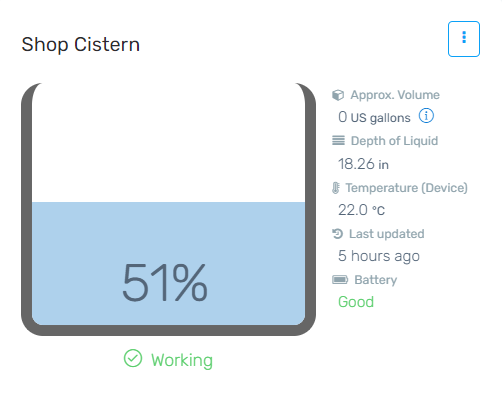 interpreting liquid level monitor data
Baseline and Normal Operating Range: Establish a baseline for normal operation. This involves monitoring the liquid level over time to identify typical fluctuations and patterns. Knowing the typical range of liquid levels during normal operation will help you identify any deviations that may indicate a problem.
Detecting Anomalies: Look for sudden or unexpected changes in the liquid level readings (high or low). Anomalies could indicate leaks, overflows, pump failures, or other issues that require attention. Compare the current readings to historical data to determine if the change is significant. Notice in the water level monitor below the anomaly on 02-24 around 19:00 hours; in this case the anomaly was due to a pump failure.
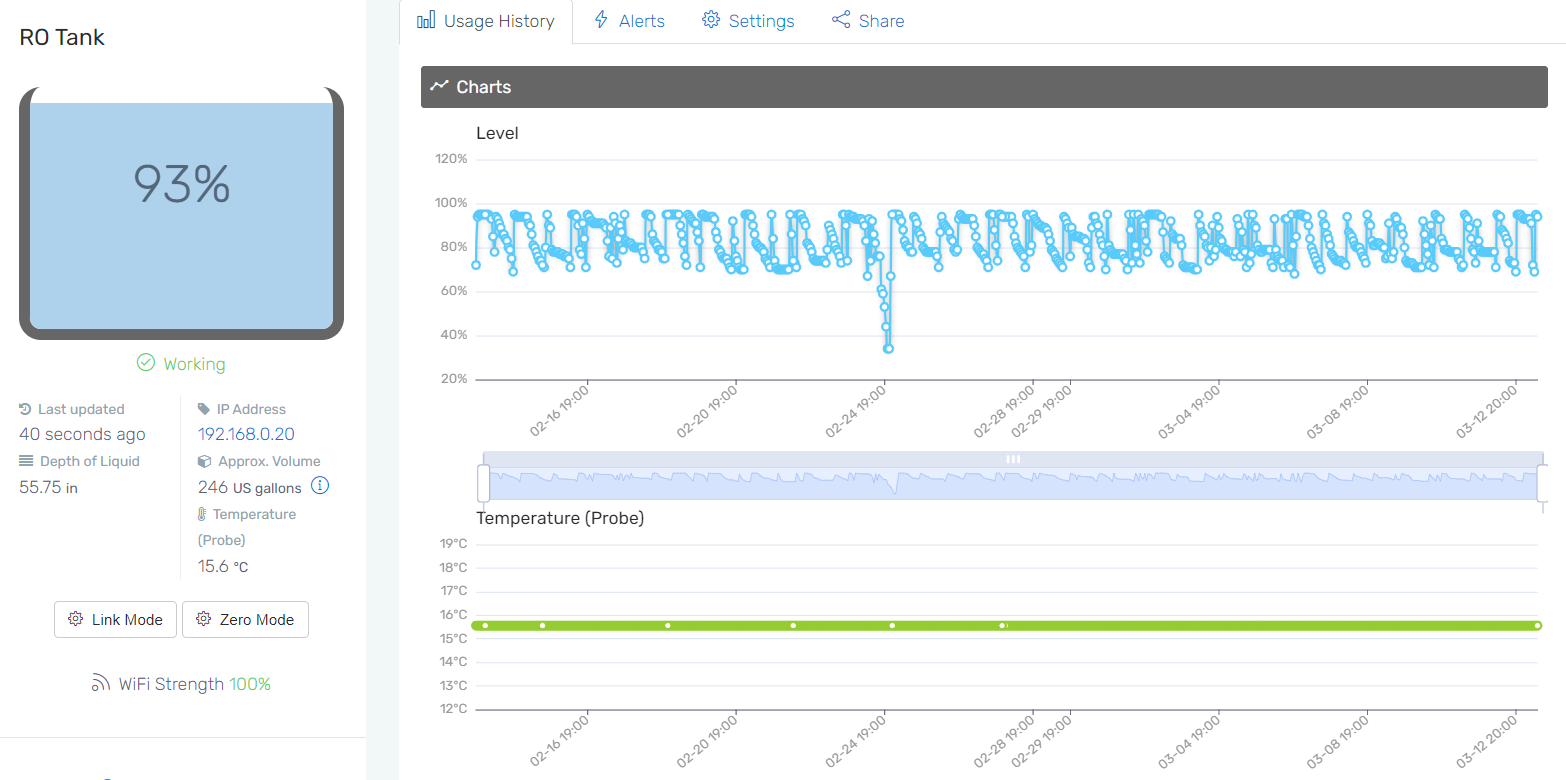 detecting anomalies in water level monitors
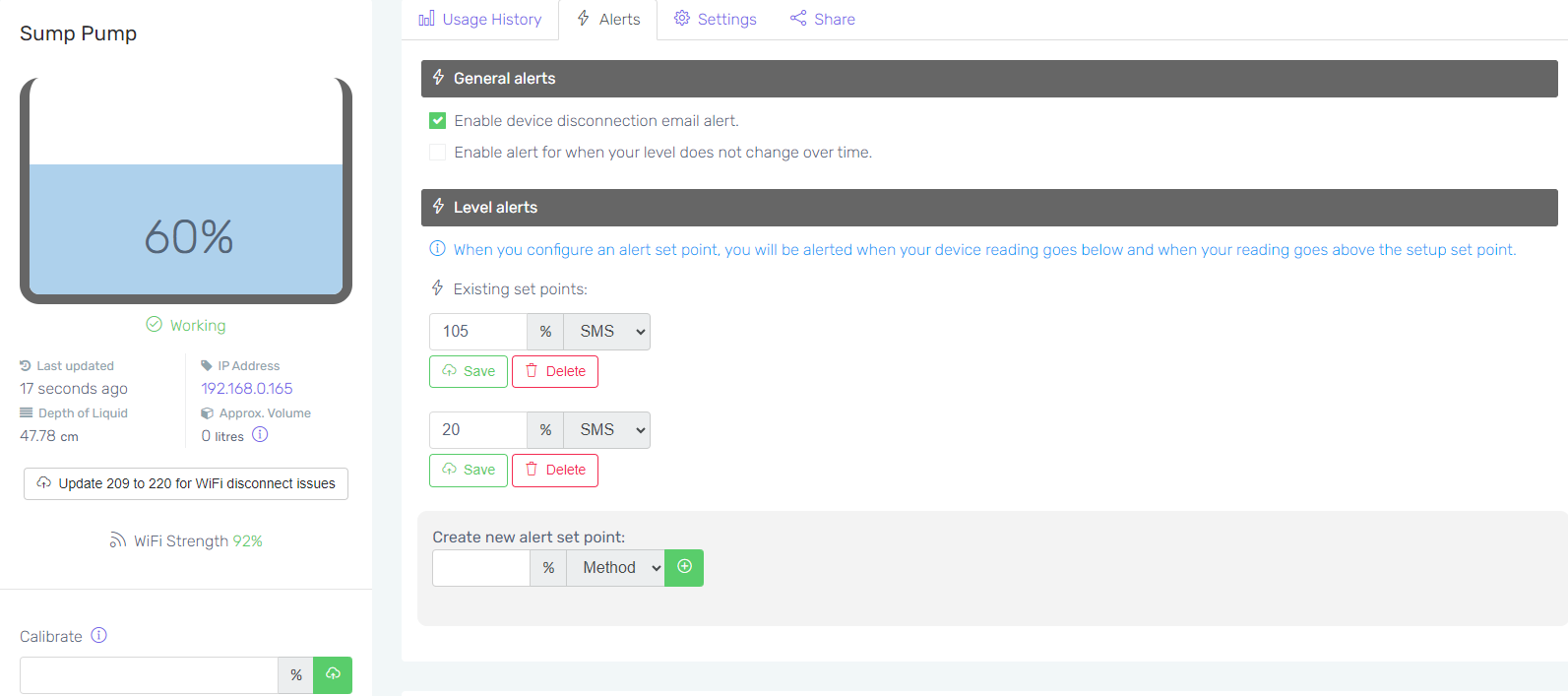 Setting up notifications
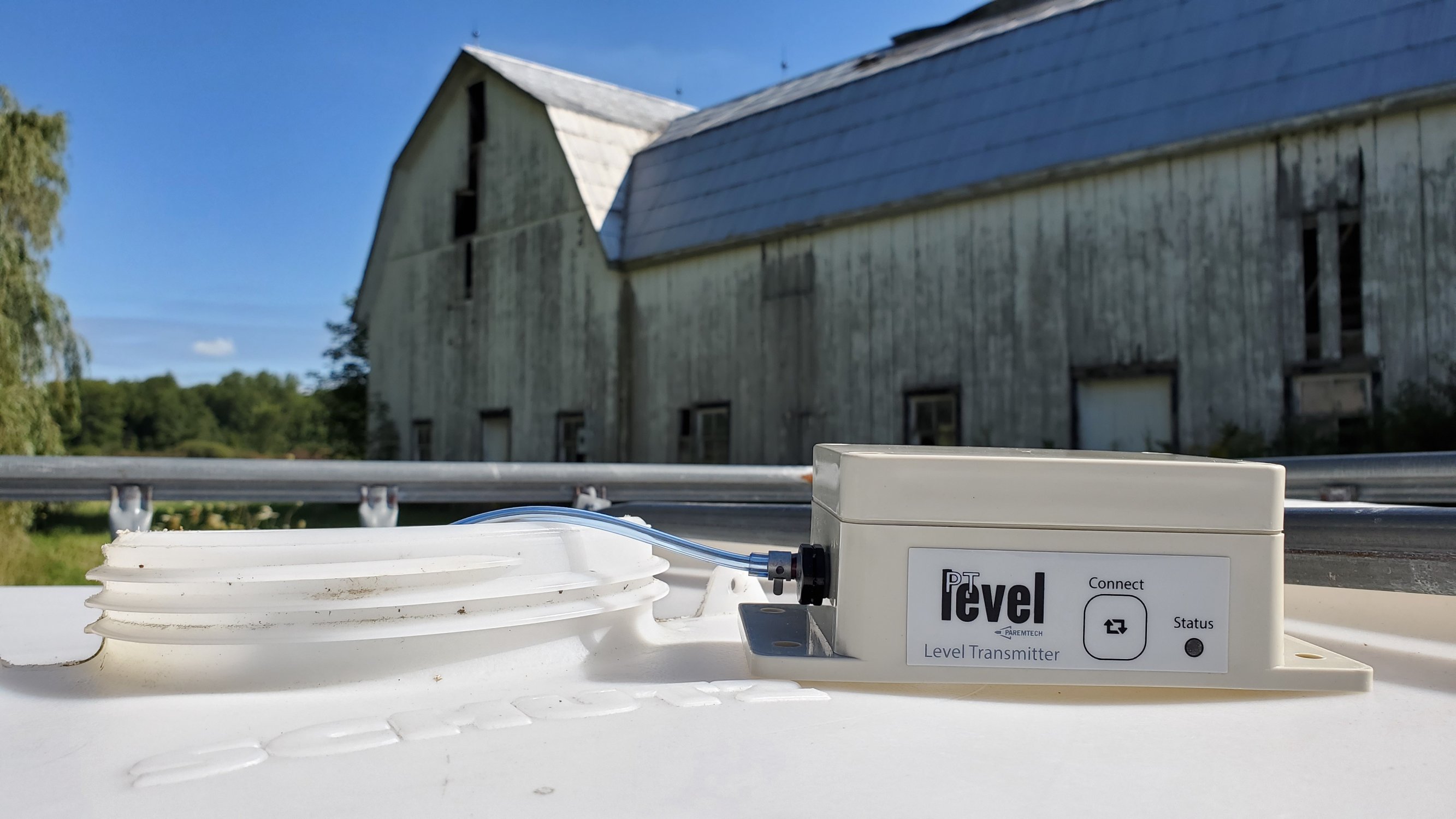 water level monitor outdoor installation